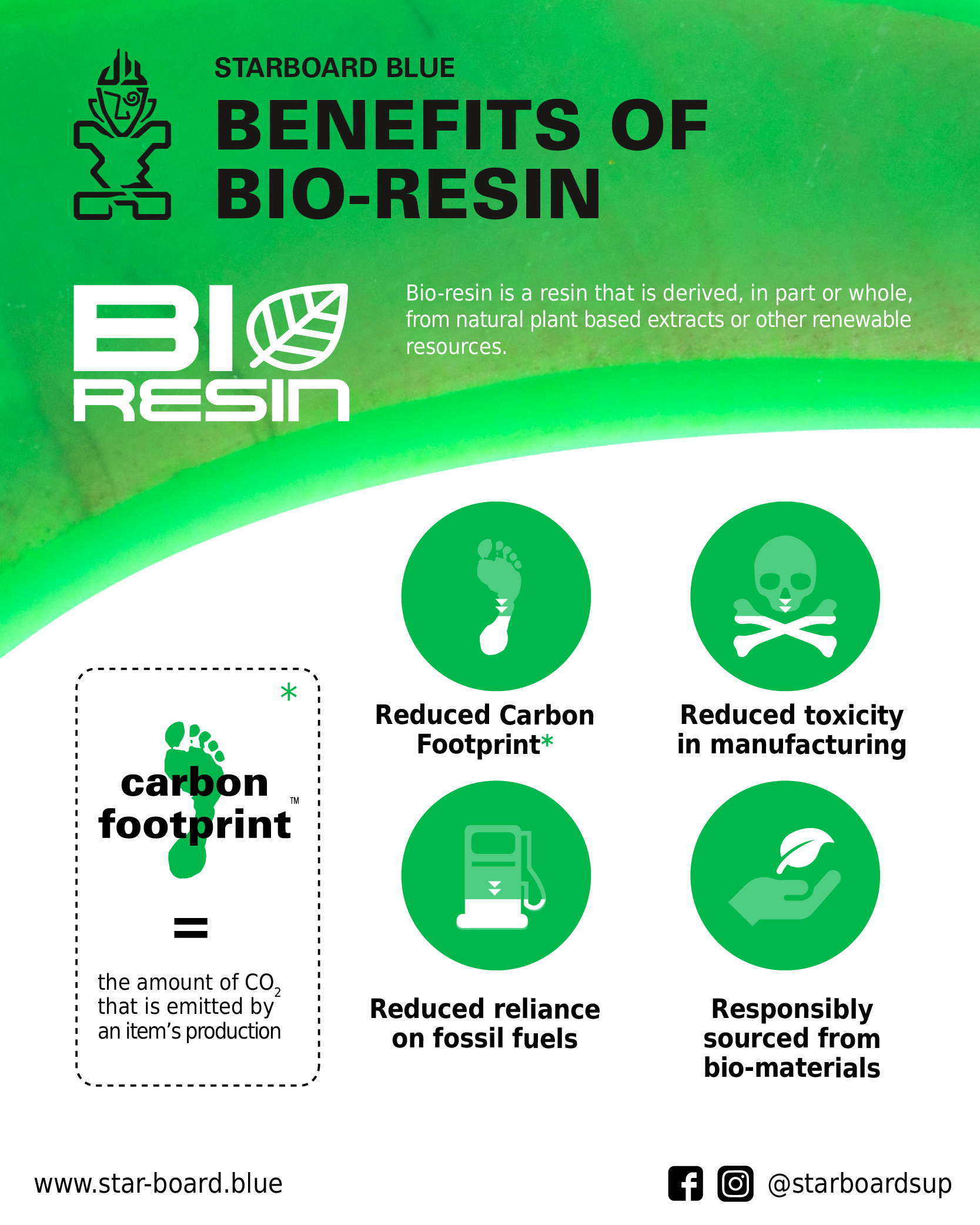

If you've seen the words bio resin in a product description, you may wonder what it's made from. This picture separates where the raw materials come from and the four benefits Starboard HQ introduced.
01. It's about some or all of the raw materials
The original defines it as a resin that gets some or all of its raw materials from plant extracts or renewable resources. So the word bio alone doesn't mean it's 100% plant-based.
Resin is one of the materials that make up a board's structure. How much is used in a particular product is something to check separately in that product's specs.
02. The four icons are the benefits the original expects
Carbon footprint, toxicity in manufacturing, dependence on fossil fuels and sourcing of bio-based materials are each marked. Starboard HQ introduces these features in the context of replacing conventional materials.
Please don't reread the picture's wording as non-toxic or biodegradable. Saying the raw materials came from plants is different from saying something breaks down on its own after use.
03. Good questions help you understand products better
Check what resin is used in the model you're choosing, and whether there's a material description for that model year. Reading the individual specs is more accurate than assuming the same proportion is used across all products.
Go one step beyond knowing where materials come from, and also look after how you store your board so it lasts. It's about connecting the material description with the care you give while you use it.
Sources and scope
The artwork is Starboard's original Benefits of Bio-resin infographic from the time; the explanation is Starboard Korea's commentary. We keep its definition that some or all of the raw material comes from plant or renewable sources, and don't extend it to claims about proportions across all current products, non-toxicity or biodegradability.
- Starboard HQ infographic: SB_Blue_Benefits of Bioresin_V1-01.jpg ↗
- Starboard Blue materials overview ↗
The illustration is Starboard's original artwork; the explanation is Starboard Korea's editorial guide, translated into English here. Sources checked: 2026-09-08.