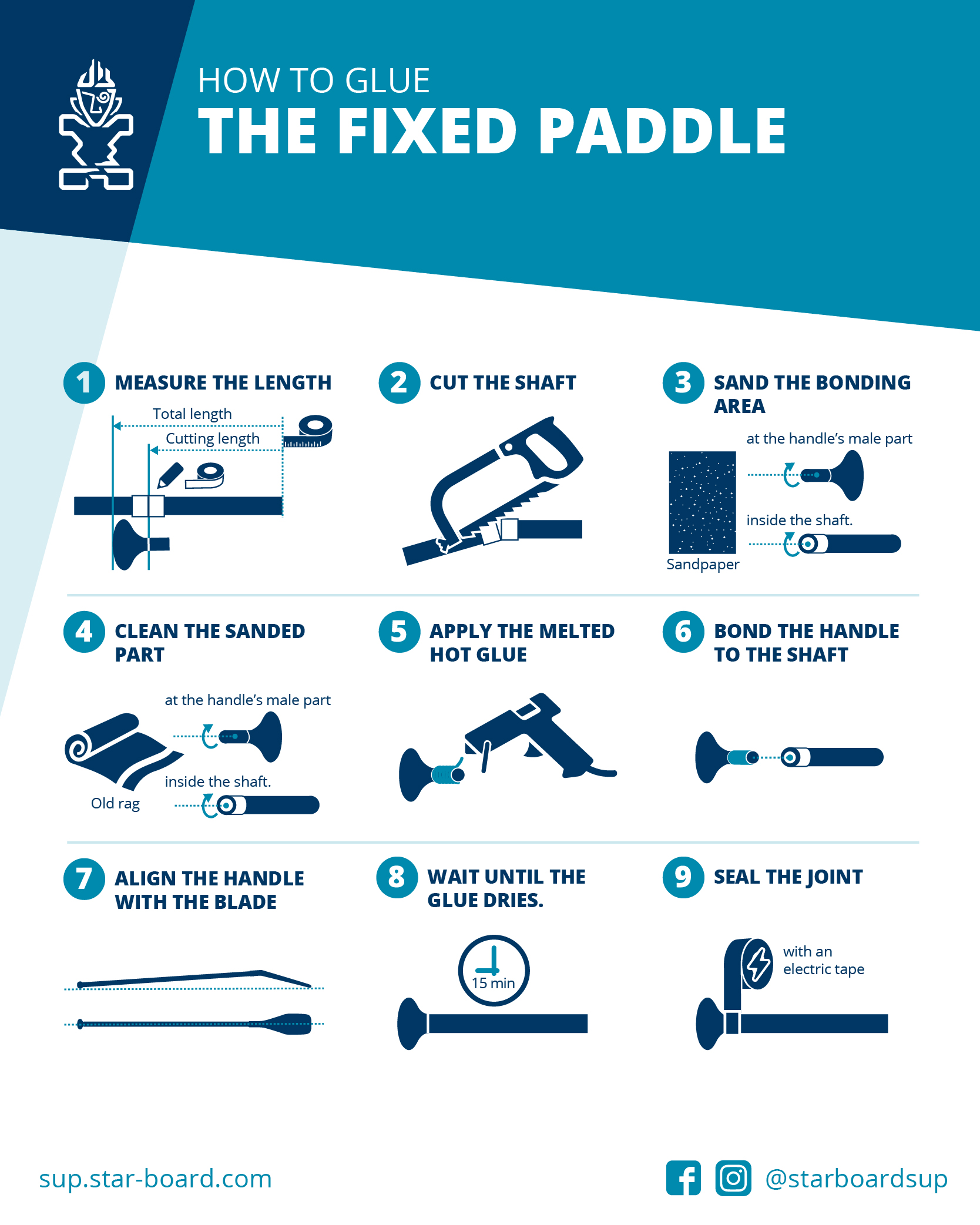

It's a trimming example for this particular fixed paddle. For cutting and gluing, put the model's instructions and professional work first, and don't use the original's 15 minutes as a general curing time.
Some fixed paddles are used by deciding the length and then trimming the shaft. Once cut, the length can't easily be undone, so before following the steps in the picture, check your paddle and the length you need.
01. Total length and cutting length are different
The first picture distinguishes the paddle's total finished length from where to cut the shaft. You also have to allow for the part where the handle slides in, so don't cut the end off by eye.
Check the length you'll actually use thoroughly before cutting, and get help from the model's trimming instructions and your retailer. This material isn't about cutting adjustable paddles the same way.
02. The original shows one specific hot-glue method
The picture goes from cutting, to preparing the bonding area, to wiping, to applying hot glue and fitting the parts together. It isn't a general method that applies as-is to every carbon or composite shaft and every adhesive.
You also need to consider dust, heat and adhesive compatibility, so think first about having a professional do the work. Don't make up heating temperatures or mixing methods that aren't in the picture.
03. Check the handle direction and curing conditions
The original shows lining up the handle with the blade, waiting until it sets, and finishing the joint. 15 minutes is an example from that original, not a general curing time for every adhesive.
After the work, check the connection and how well it has cured according to the product instructions before you use it. If the length isn't right or the joint moves, have it inspected before you go out on the water.
Sources and scope
The artwork is Starboard's original hot-glue trimming instructions for this particular fixed paddle; the explanation is Starboard Korea's commentary. It isn't a do-it-yourself guide for every shaft or adhesive, and for cutting, dust, heat and curing conditions, the manufacturer's instructions and professional work come first.
The illustration is Starboard's original artwork; the explanation is Starboard Korea's editorial guide, translated into English here. Sources checked: 2026-09-08.