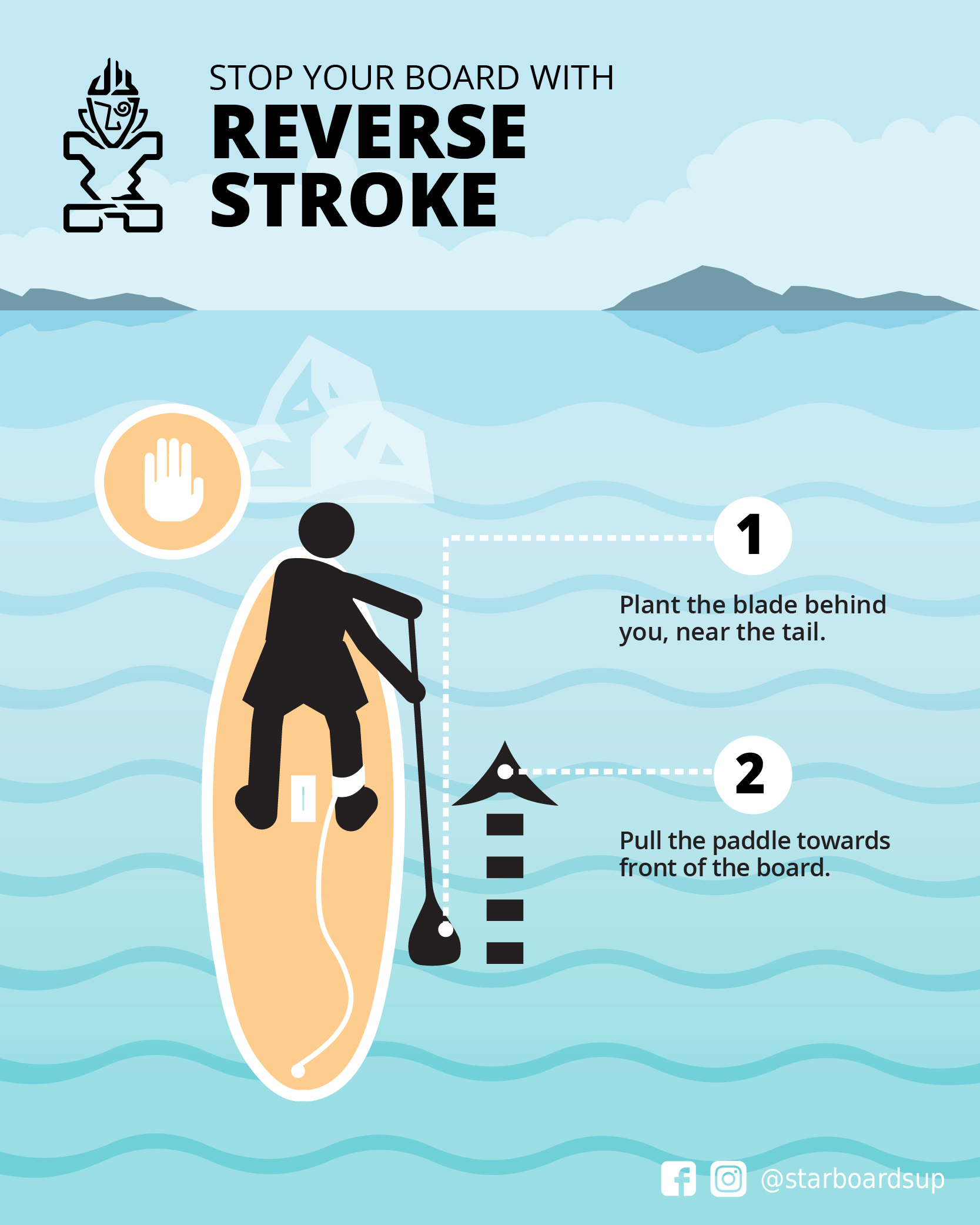

Just as worth learning early as moving forward is how to stop. There's no brake pedal on the water, after all. If you know how to slow down with the reverse stroke, you can react before you get close to people or obstacles.
01. Get ready before the moment you need to stop
Don't try to stop suddenly once a person or board is already close; start the move while you still have plenty of room. Check not only the way you're heading but also behind you, where the paddle will go in, and both sides.
At first, practice in calm water while moving slowly. Rather than counting on stopping within a set distance, what matters is feeling how the board responds to the wind, the current and your current speed.
02. Put the blade in behind you
The back end of the board is called the tail. The starting point is putting the blade in the water behind you, near the tail. Rather than twisting your upper body hard to reach far, start within a range where you can keep your balance.
Once you feel the wide blade in the water, move on to the next step. Rather than moving the paddle quickly through the air, first check where it enters the water and your balance.
03. Push from back to front to slow down
With the paddle in the water, push it toward the front of the board. Think of it as the opposite of going forward, where you pull from the front toward your feet. The arrow in the picture shows the direction you move the paddle, not the direction the board moves.
After one stroke, check the board's speed and direction. Pushing water on one side can also change your direction. Rather than using a lot of force from the start, get to know the board's response by adjusting the stroke as much as you need.
04. Start off briefly, stop with room to spare
Start off slowly on a stretch with no obstacles, then slow down with the reverse stroke. Once you're comfortable, practice the same flow on the other side, following your instructor's guidance. Learn to stop before you practice going fast.
Don't use people, rocks on the shore or moored boats as practice targets. Rather than stopping by bumping into things with the board or pushing off other objects with the paddle, it's best to practice plenty in a spot with space around you.
Sources and scope
The illustration is Starboard's original reverse-stroke diagram; the explanation is Starboard Korea's commentary. The arrow in the picture shows the paddle moving from near the tail toward the front of the board; it isn't an instruction for the board to move forward. The notes on practice space, low speed and checking around you are editorial commentary for beginners.
The illustration is Starboard's original artwork; the explanation is Starboard Korea's editorial guide, translated into English here. Sources checked: 2026-09-08.