1 / 3 · Pigeon pose

2 / 3 · Reverse plank

3 / 3 · Mermaid pose

The artwork shows an instructor's example poses. Learn variations that suit your body, and stop if you feel pain.
Bending as deeply as in the photos isn't the goal of yoga. This time, let's look at Kelly Huck's three poses and see which parts of the body support you and which parts lengthen.
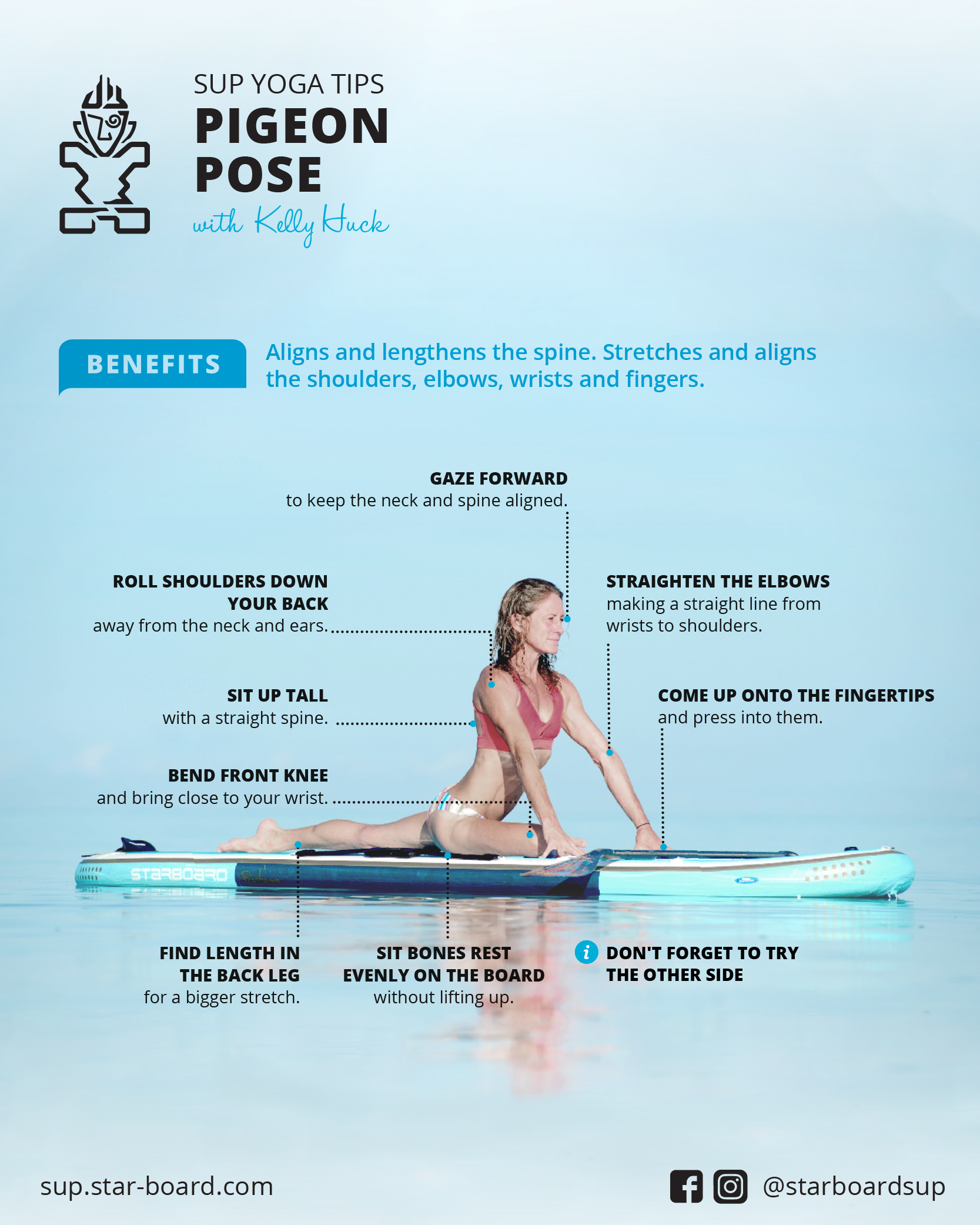
01. Pigeon pose: notice which way your upper body faces
The first picture is an example of keeping your upper body upright, your shoulders away from your ears and your gaze forward. It explains the line running from your wrists to your shoulders and the alignment of your upper body.
Please don't force your hips or knees to match the photo. Learning a variation you can comfortably support from an instructor, and stopping if you feel pain, come first.
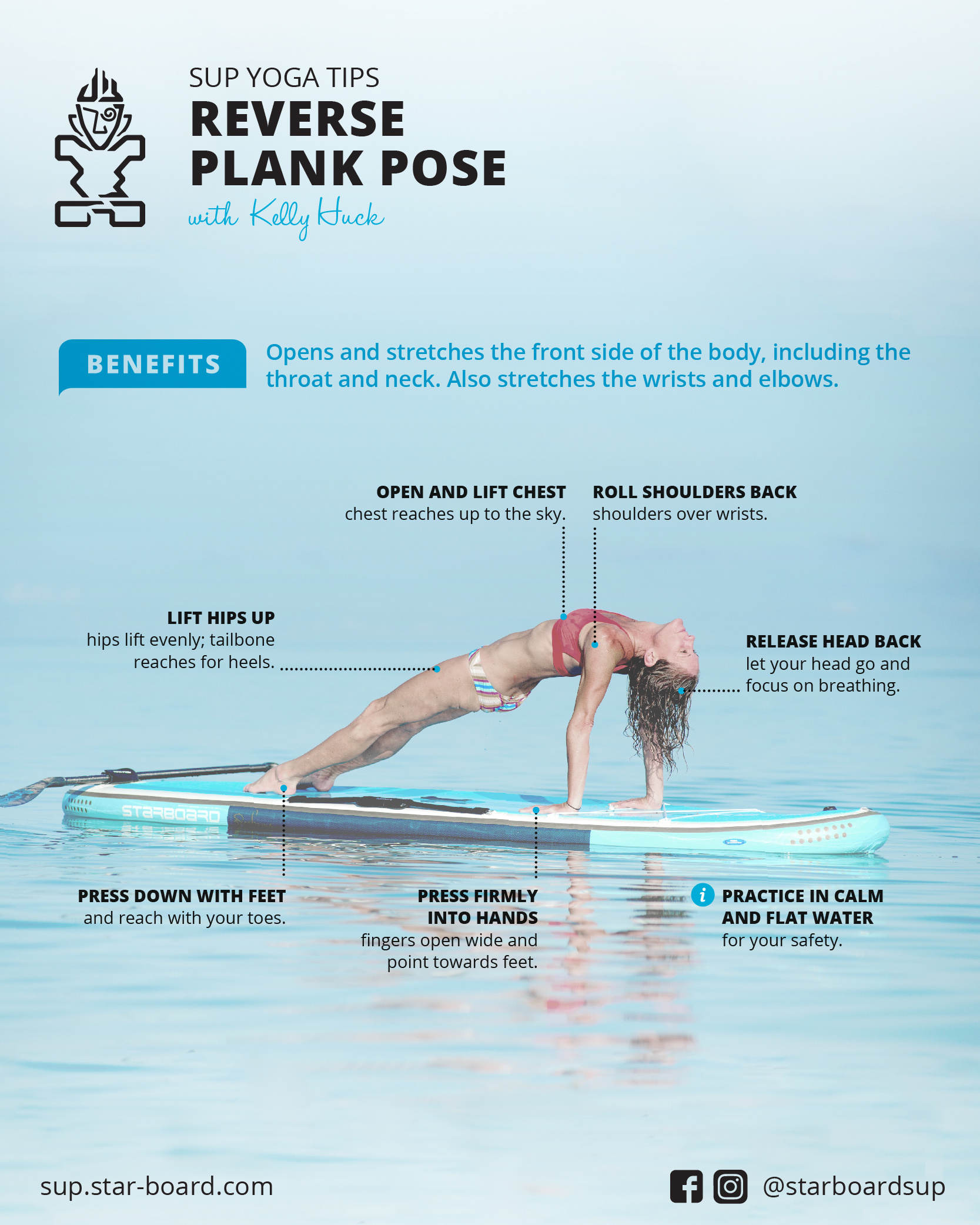
02. Reverse plank: support yourself on your hands and feet
The second picture shows supporting yourself on your hands and feet while opening up the front of your body. It notes the direction of your fingers, pressing down through your feet, and practicing on calm water.
Don't read the original's example of letting your head go back as meaning you should tip your neck back all the way. Adjust the pose with an instructor within a range that doesn't strain your wrists, shoulders or neck.
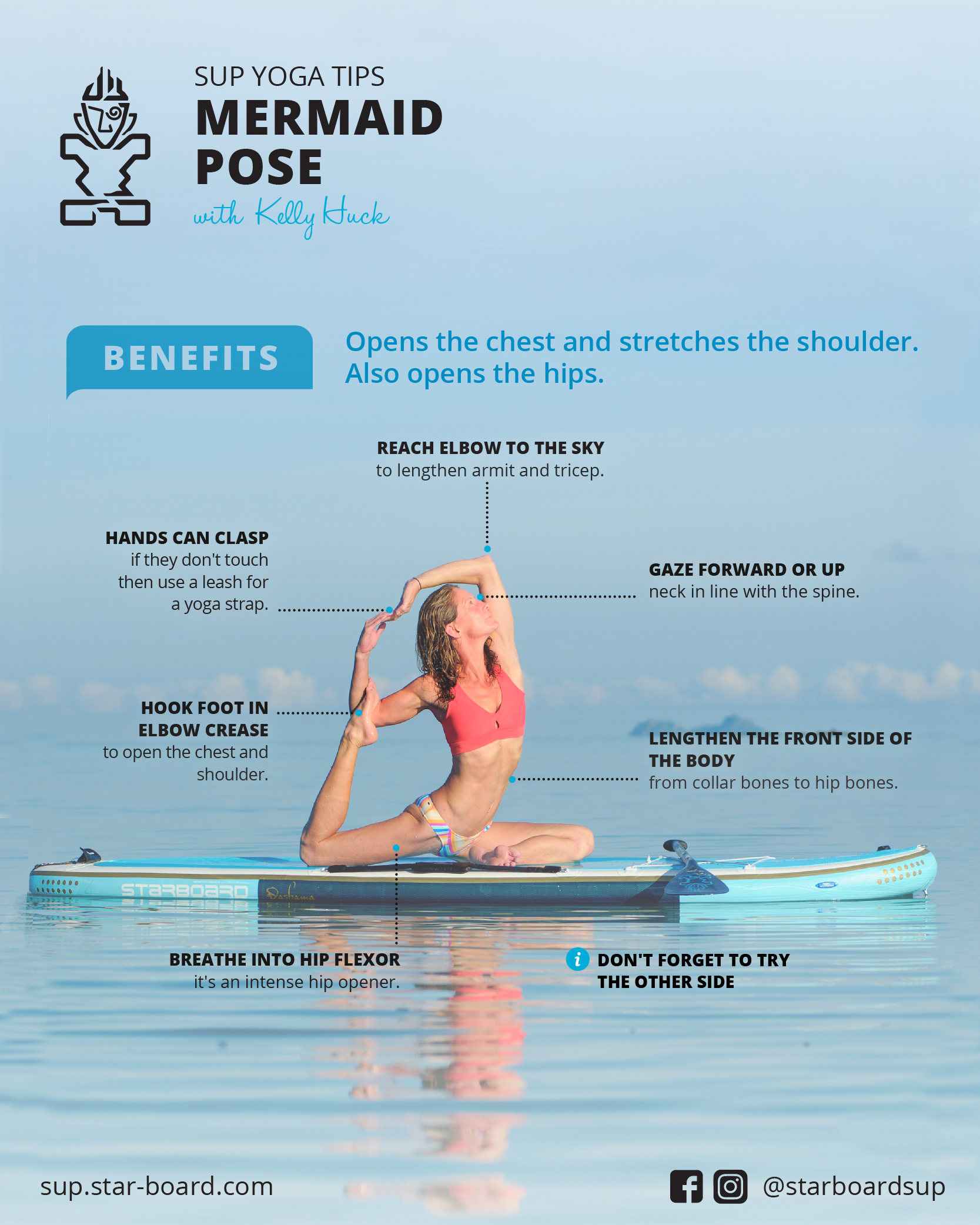
03. Mermaid: an example that needs deep flexibility
The third picture is a pose where you hook your foot toward your elbow and open up your upper body. When it's hard to join your hands, the original gives the example of using a leash like a strap, but we don't treat that as a recommendation to take off your safety leash or wrap it around your body.
If you need a prop, choose a suitable yoga strap with your instructor. The three pictures aren't a treatment prescription, and especially if you already have pain or an injury, checking which moves suit you comes first.
Sources and scope
The artwork is Starboard's original infographics of three yoga poses with Kelly Huck; the explanation is Starboard Korea's commentary. The notes on flexibility and alignment are the original's introduction to the exercises and don't guarantee any treatment. We don't take the example of using a leash as a strap as a recommendation to disconnect the rider's safety leash or wrap it around the body.
- Starboard HQ infographic: Text Neck Series_v1_Pigeon.jpg · Text Neck Series_v1_Reverse Plank.jpg · SUP Yoga_Mermaid Pose_Mermaid.jpg ↗
- NCCIH on yoga: effectiveness and safety ↗
The illustration is Starboard's original artwork; the explanation is Starboard Korea's editorial guide, translated into English here. Sources checked: 2026-09-08.