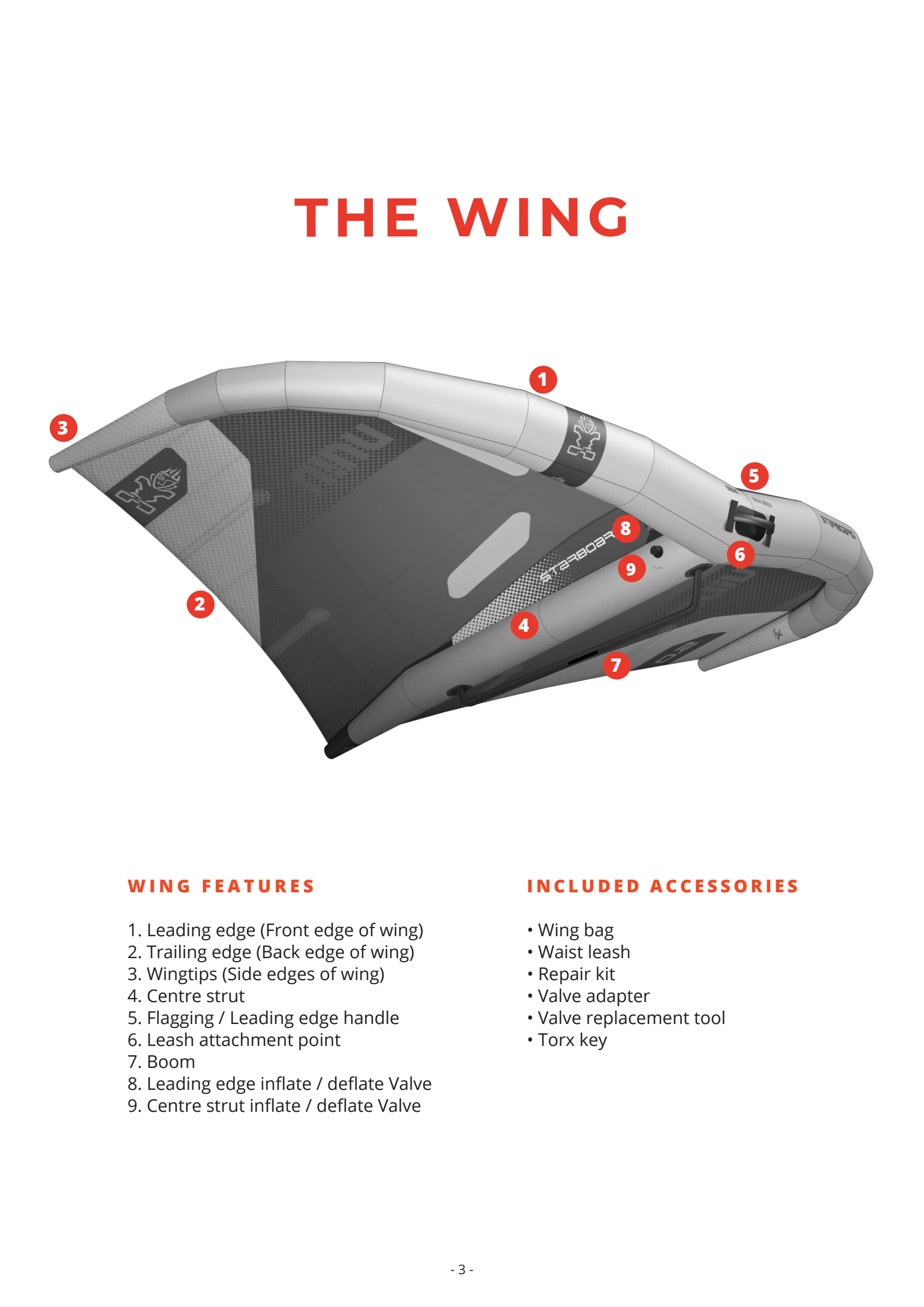
1 / 2 · Parts of a wing

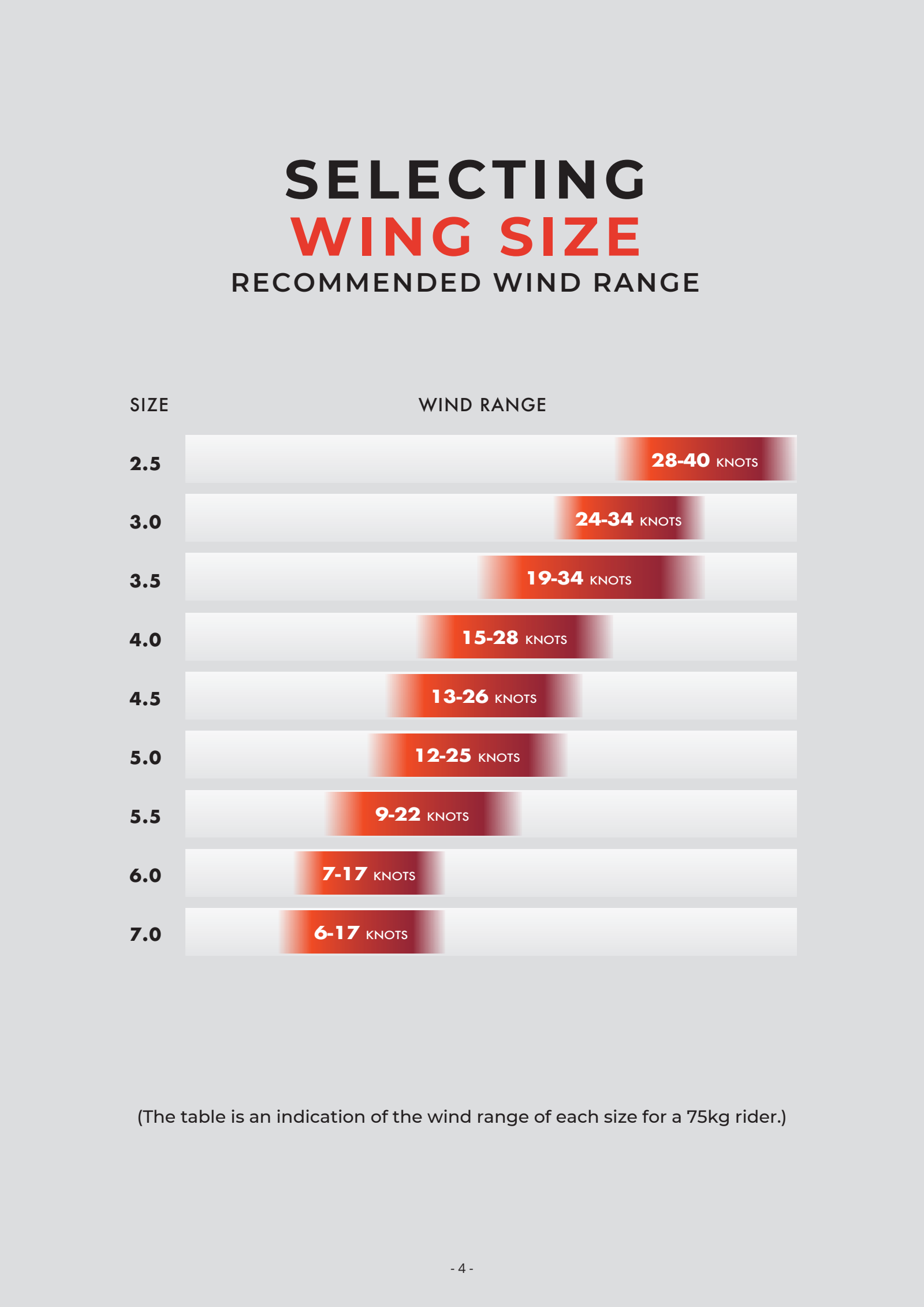
2 / 2 · Size and wind speed

When someone explains a wing, unfamiliar words like leading edge, strut and boom come at you all at once. Learning just a few names makes product descriptions and setup instructions much easier to follow. Shall we start by finding where they are in the picture?
01. Where you hold it and where the air goes in
The leading edge is the front edge of the wing, and the center strut is the part that supports the middle. The boom in Starboard HQ's picture is the bar you hold while riding; the leading edge handle is a separate one at the front of the wing.
Find the leash attachment point and the air valves too. Then when a manual says “leading edge valve,” you'll know exactly where to look. The layout of handles, boom and chambers can differ by model.
- Leading edge / Trailing edge / Wingtip
- Center strut / Leading edge handle / Boom
- Leash attachment point / Leading edge air valve / Strut air valve
02. Read the size chart starting from the reference weight
The table in Starboard HQ's manual gives reference wind ranges for a 75kg rider. If your weight or experience is different, you can't pick a size from this table alone. The ranges aren't guaranteed to be the same for every wing model, either.
Wing size is shown as area in ㎡, and wind speed in knots. Once you've found a size you're interested in, read the wind range on the same row as well.
| Wing size (㎡) | Reference wind speed (knots) |
|---|---|
| 2.5 | 28–40 |
| 3.0 | 24–34 |
| 3.5 | 19–34 |
| 4.0 | 15–28 |
| 4.5 | 13–26 |
| 5.0 | 12–25 |
| 5.5 | 9–22 |
| 6.0 | 7–17 |
| 7.0 | 6–17 |
03. Keep the wind chart and safety decisions separate
For example, a wind range listed in the table doesn't mean those conditions suit a beginner. You need to look at your skill, gusts, the water surface, the location and your gear setup together.
If you're buying for the first time, note down where you'll usually ride, your experience and your weight, and talk it over with an instructor or a shop. With forecasts, too, make a habit of checking them together with conditions on site rather than looking at a single number.
Sources and scope
The illustrations are the original drawings, wind-range bars and figures from pages 3–4 of Starboard's Wing User Guide; the explanation is Starboard Korea's commentary. The wind range for each size is a reference value for a 75kg rider and doesn't settle anyone's gear choice or safe conditions.
The illustration is Starboard's original artwork; the explanation is Starboard Korea's editorial guide, translated into English here. Sources checked: 2026-09-08.