1 / 2 · Five steps to get back on from the tail

2 / 2 · Why stay connected to your board

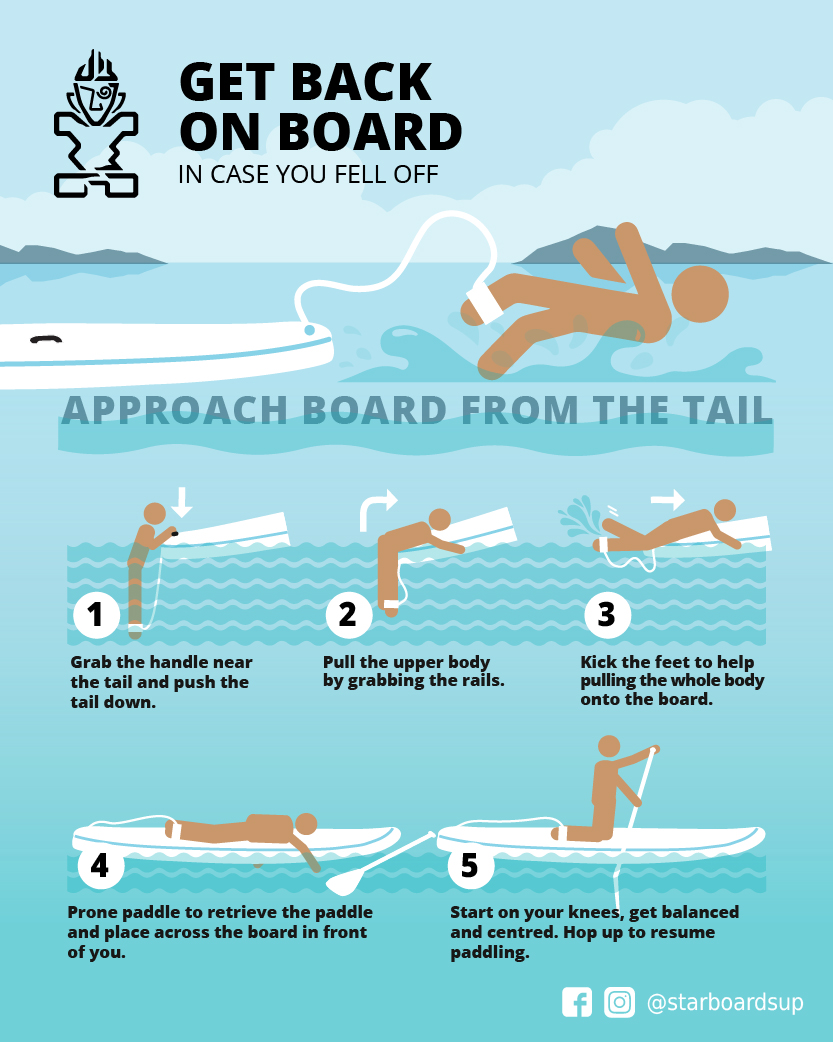
If you've learned to climb back on from the side after falling in, how about a picture that approaches from behind? This picture uses a SUP with a handle near the tail. First check whether the method suits your board's design and your body.
01. Use the tail handle and the rails on both sides
The first scene shows approaching by grabbing the handle at the back of the board and pushing the tail down. Next, you grab the rails on both sides and bring your upper body onto the board. The rails are the two side edges of the board.
Not every board has a handle in the same place. First check where your board's handle and fin are, and the condition of the water around you. Don't use this method as-is on gear with a sharp foil attached.
02. Kick your body up and get your paddle
The third scene adds a kick to bring your whole body up onto the board. Rather than hauling yourself straight up with arm strength alone, learn with an instructor how to move your body along the surface of the water.
In the next scene, you lie on your stomach, paddle with your hands to get your paddle back, and lay it across the front of the board. Staying stable on the board comes first, rather than straining to reach out for the paddle again.
03. Balance on your knees, then stand up
Last, you balance on your knees in the middle of the board and, when you're ready, stand up and carry on paddling. Don't rush to stand straight away; get your breath and balance back first.
If this method is hard or doesn't suit your board, look again at the side reboarding method you've already learned. It's good to practice with an instructor in calm, supervised water and learn the method that works for you.
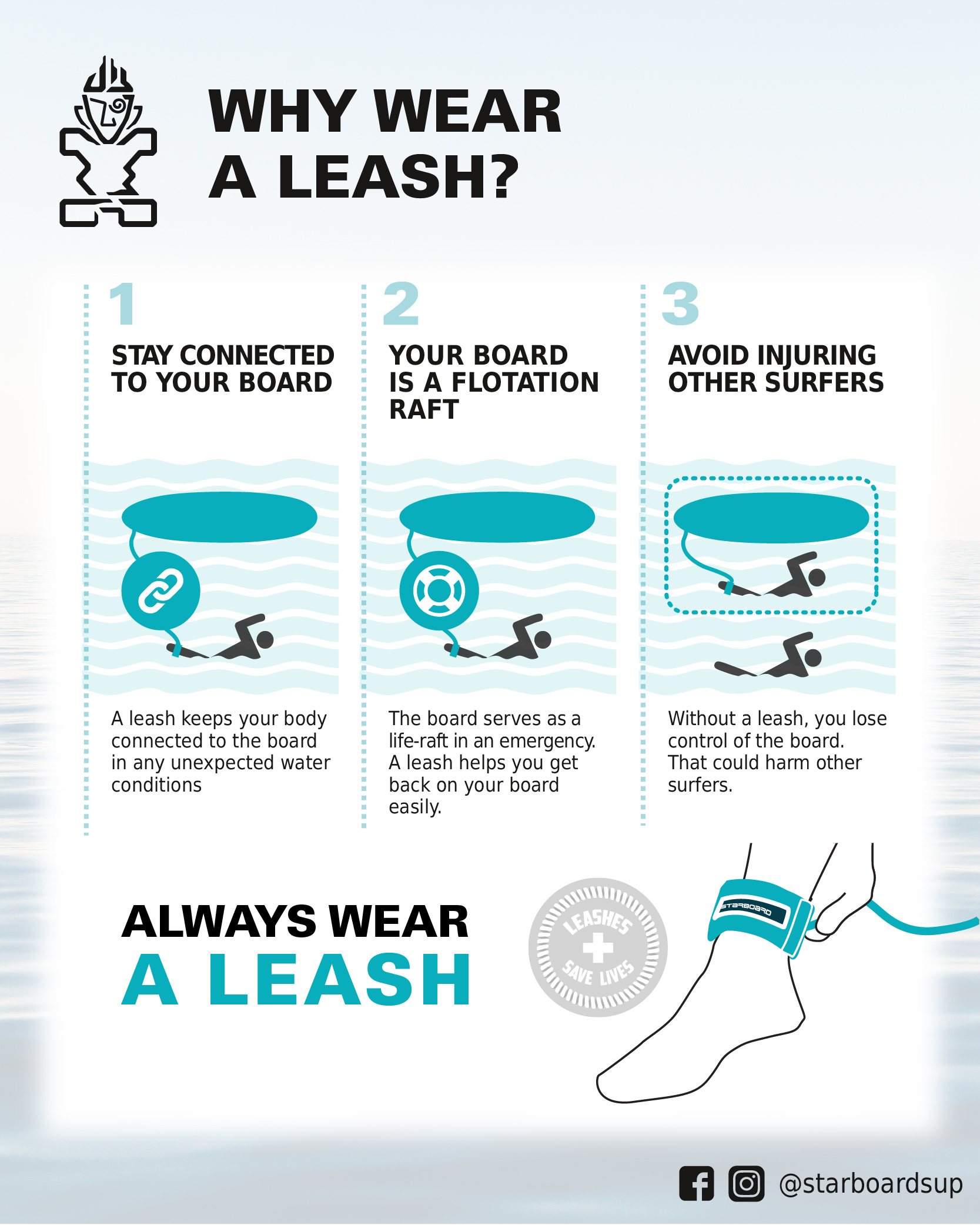
04. To get back on, you need to stay close to your board
The second picture explains that a leash connects you to your board, lets you use the board for support in an emergency, and helps reduce the risk of a drifting board hitting someone else. That's why being ready not to lose your board when you fall goes hand in hand with practicing getting back on.
That said, a board or a leash doesn't replace a buoyancy aid that fits you. Choose a leash to suit the water and the risk of snagging, and learn how to release it too. Especially on moving water, don't just use an ankle leash because of the short note about wearing one in the picture.
Sources and scope
The artwork is Starboard's original five steps for getting back on from the tail and its picture of a leash's three roles; the explanation is Starboard Korea's commentary. It's an example with a SUP that has a handle, and it doesn't apply to every board or to foil gear. Read the note about wearing a leash together with choosing one for the water, snag risk and learning to release it; the board doesn't replace a buoyancy aid.
- Starboard HQ infographic: How to get on board after falling_Final-02.jpg · Why wear a leash_V3-01.jpg ↗
- RNLI SUP safety ↗
The illustration is Starboard's original artwork; the explanation is Starboard Korea's editorial guide, translated into English here. Sources checked: 2026-09-08.