
One-day plastic watch
Read the words in the picture
One-day plastic watch
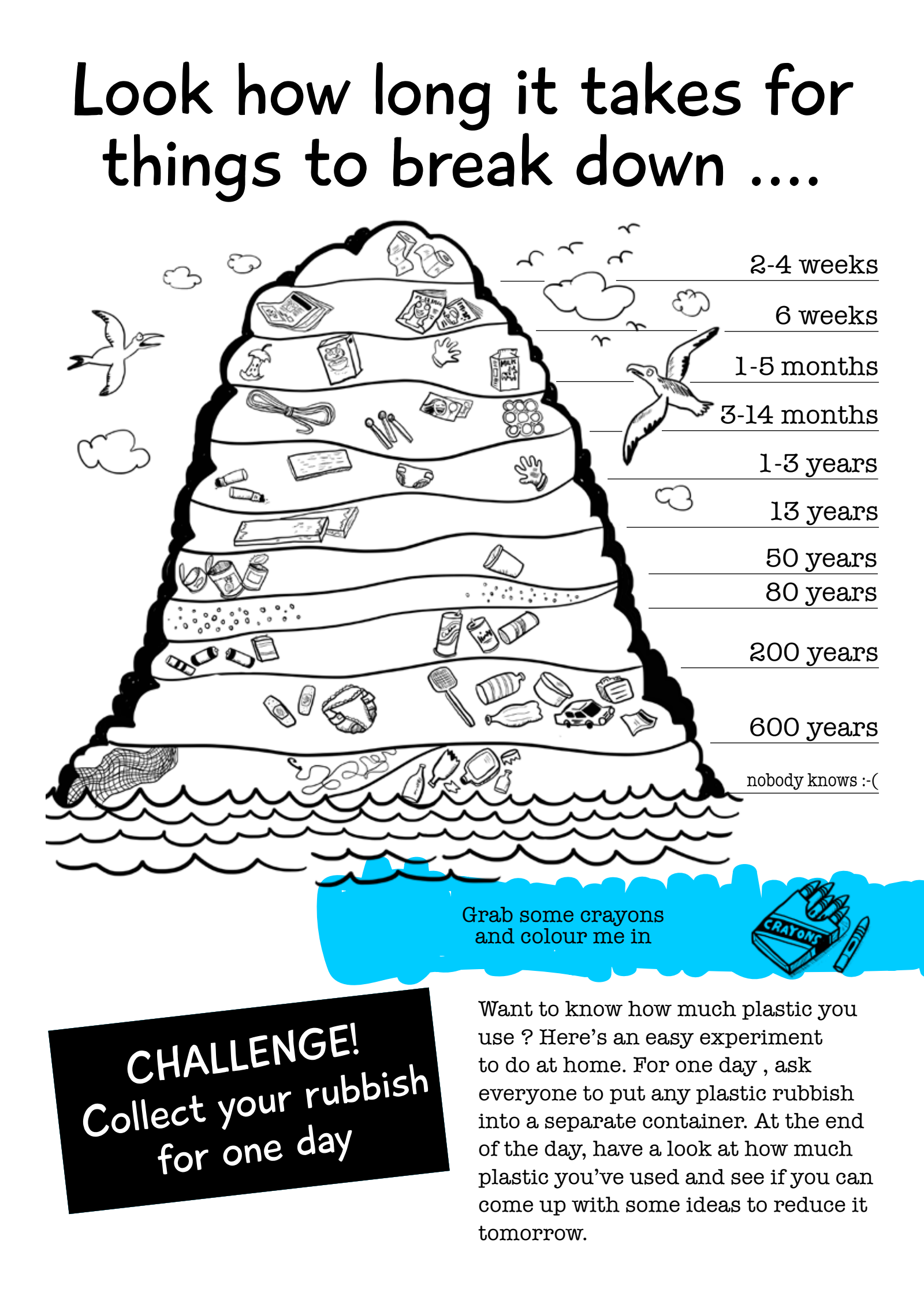
- Look how long it takes for things to break down ....
- 2-4 weeks
- 6 weeks
- 1-5 months
- 3-14 months
- 1-3 years
- 13 years
- 50 years
- 80 years
- 200 years
- 600 years
- nobody knows :-(
- Grab some crayons and colour me in
- CRAYONS
- CHALLENGE!
- Collect your rubbish for one day
- Want to know how much plastic you use? Here's an easy experiment to do at home. For one day, ask everyone to put any plastic rubbish into a separate container. At the end of the day, have a look at how much plastic you've used and see if you can come up with some ideas to reduce it tomorrow.
- MILK
What you notice today can become tomorrow's habit
What plastic trash does your home make in one day? When you really look at something you only thought of as 'a lot,' it's easier to find habits you can change. Take a fresh look at the things you usually use, and notice what keeps showing up. Look at today's items with your family, and pick one small change to try tomorrow.
The times on the right side of the picture are examples from the original workbook. How long things really take to break down can change depending on the material and where it ends up. Instead of memorizing the numbers, think together about how something used for a short time can stay around for a long time.
Try it together like this
Tell your family about today's mission
Tell your family you'd like to look at your plastic trash separately. Decide together where and when you'll watch. Only collect things a grown-up can handle safely. You don't need to use new things on purpose or make extra trash.
Look at where each item came from
At the end of the day, look at what you gathered and think about what each package held. You can group things with similar uses, like snacks, drinks and household items, or draw them on paper. For things that are hard to touch, you can just watch while a grown-up shows you.
Find the things that showed up again and again
Check whether packaging with the same shape or the same use showed up several times. Pick the item that stands out most, and talk with your family about when and why you used it. The key to this activity is thinking together about which uses you need and which ones you could change.
Choose one thing to do tomorrow
Find ways your family can help, like reusing things you already have or choosing items with less packaging. Write down your promise, and later look back to see if you really did it. When you're done, sort and put away the trash properly with a grown-up.
Let’s talk
What do you think?
- What packaging showed up many times today, and when does your family usually use it?
- If you picked one habit to change starting tomorrow, what would it be?
Where the pictures and activities come from
SUPKids workbook p. 31 ↗
The pictures are pages from the original workbook. The steps and questions below are Starboard Korea’s notes to help families use them together.
Save the original workbook ↓