
 6:55
Basics lesson 01
Warming up before you go in
A warm-up that loosens your shoulders, back and legs and wakes up your sense of balance.
Learn from the video →
LEARN WITH STARBOARD
From choosing your first board to standing up on the water, starting with your first questions.
START WITH THE EXPERIENCE
Understand the sport. Start with the experience you want.
Getting ready for your first SUP
A quick look at clothing and gear for your first day.
+ Select a marker to see what each item is for.

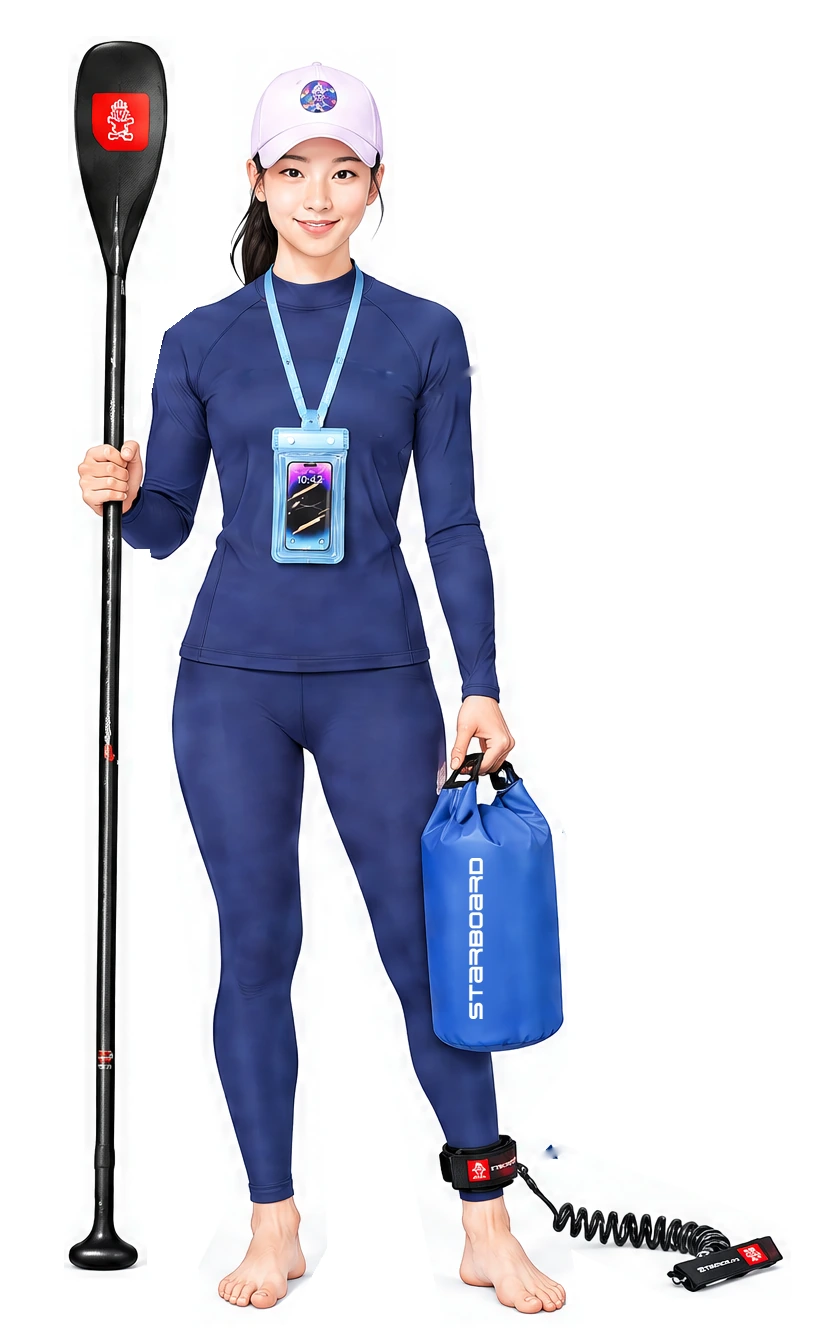
Paddle
The wide face that pushes water to move you forward
The wide, flat end of the paddle. You put the blade in the water and pull it alongside your body to move the board. Its shape and area change how it grips the water and how much effort you need.
The picture shows the blade held up so the parts are easy to see. When you actually paddle, the blade points down into the water.
Learn which way the blade faces ↗Paddle
The pole that carries the force of your hands to the blade
The long part joining the handle and the blade. One hand holds the handle, the other holds the shaft. The right length lets you paddle comfortably without straining your back and shoulders.
Beginners should set the length for their height and stance with a coach. Not every paddle is adjustable.
The right paddle length for you ↗Paddle
The handle that sets the paddle’s angle
The handle at the end of the shaft. Wrap your palm around it comfortably and use it to control the paddle’s angle. Keep your wrist relaxed rather than gripping too tightly.
When you paddle, this handle is at the top. When you switch sides, your hands switch roles too.
How to hold the paddle ↗Clothing
Shade that cuts glare
The brim shades your eyes and face. A cap covers the top of your head; a visor is open on top. Choose one that fits well so the wind doesn’t blow it off.
A hat alone isn’t full sun protection. Also protect exposed skin and drink enough water.
Getting ready for the sun ↗Clothing
A watersports top that lets your arms move freely
A close-fitting stretchy top that reduces chafing and covers skin while you’re active. Check the product’s UPF rating for sun protection.
A rash guard doesn’t replace a life jacket or a thermal suit. In cold water, wear a wetsuit or drysuit suited to the water temperature.
What to bring for your first SUP ↗Clothing
Bottoms that stay comfortable when wet
Board shorts are light shorts that move freely; water leggings are stretchy bottoms that cover your legs. Check how they feel when wet and whether the waist stays secure.
Choose clothing for your own comfort, the water temperature and the weather, not by gender. Neither style replaces thermal gear in cold water.
See clothing and what to bring ↗Things to carry
Keep a way to call for help on you, even on the water
A case that protects your phone from water and splashes. Keep it on your body within reach so you can call for help even if you’re separated from your board.
Test it empty for leaks before use and check the seal. Keep a neck lanyard tidy so it can’t snag on gear; a buoyancy aid pocket also works.
Be ready to call for help ↗Things to carry
One place for things that must stay dry
A waterproof bag for keys and small items. Roll and close the opening as the product instructions say, and when you paddle, don’t hold it: secure it firmly to the board, for example under the deck bungees.
The small bag in the picture is not a board bag. Waterproofing and closures differ by product, and keep your emergency phone on your body separately.
Getting your things ready ↗Safety
The line that keeps you attached to your board if you fall in
It connects you to the board so the board is less likely to drift away. The coiled leash in the picture is wound like a spring. Check the cuff and the board attachment before use.
An ankle leash doesn’t suit every kind of water. Where there is current, tidal flow or a snag risk, you need a suitable system such as a quick-release waist leash, and training in how to release it. A leash doesn’t replace a buoyancy aid.
A leash for where you paddle ↗The wide, flat end of the paddle. You put the blade in the water and pull it alongside your body to move the board. Its shape and area change how it grips the water and how much effort you need.
The picture shows the blade held up so the parts are easy to see. When you actually paddle, the blade points down into the water.
The long part joining the handle and the blade. One hand holds the handle, the other holds the shaft. The right length lets you paddle comfortably without straining your back and shoulders.
Beginners should set the length for their height and stance with a coach. Not every paddle is adjustable.
The handle at the end of the shaft. Wrap your palm around it comfortably and use it to control the paddle’s angle. Keep your wrist relaxed rather than gripping too tightly.
When you paddle, this handle is at the top. When you switch sides, your hands switch roles too.
The brim shades your eyes and face. A cap covers the top of your head; a visor is open on top. Choose one that fits well so the wind doesn’t blow it off.
A hat alone isn’t full sun protection. Also protect exposed skin and drink enough water.
A close-fitting stretchy top that reduces chafing and covers skin while you’re active. Check the product’s UPF rating for sun protection.
A rash guard doesn’t replace a life jacket or a thermal suit. In cold water, wear a wetsuit or drysuit suited to the water temperature.
Board shorts are light shorts that move freely; water leggings are stretchy bottoms that cover your legs. Check how they feel when wet and whether the waist stays secure.
Choose clothing for your own comfort, the water temperature and the weather, not by gender. Neither style replaces thermal gear in cold water.
A case that protects your phone from water and splashes. Keep it on your body within reach so you can call for help even if you’re separated from your board.
Test it empty for leaks before use and check the seal. Keep a neck lanyard tidy so it can’t snag on gear; a buoyancy aid pocket also works.
A waterproof bag for keys and small items. Roll and close the opening as the product instructions say, and when you paddle, don’t hold it: secure it firmly to the board, for example under the deck bungees.
The small bag in the picture is not a board bag. Waterproofing and closures differ by product, and keep your emergency phone on your body separately.
It connects you to the board so the board is less likely to drift away. The coiled leash in the picture is wound like a spring. Check the cuff and the board attachment before use.
An ankle leash doesn’t suit every kind of water. Where there is current, tidal flow or a snag risk, you need a suitable system such as a quick-release waist leash, and training in how to release it. A leash doesn’t replace a buoyancy aid.
Safety reference: RNLI SUP safety guide ↗
STARBOARD TV · SUP BEGINNER
From warming up and preparing your gear to getting on the board and paddling, follow Lee Jinhee's STARBOARD TV lessons in the order you learn. 6 basics lessons · 2 short lessons.
These lessons are taught in Korean; the moves are easy to follow on screen.
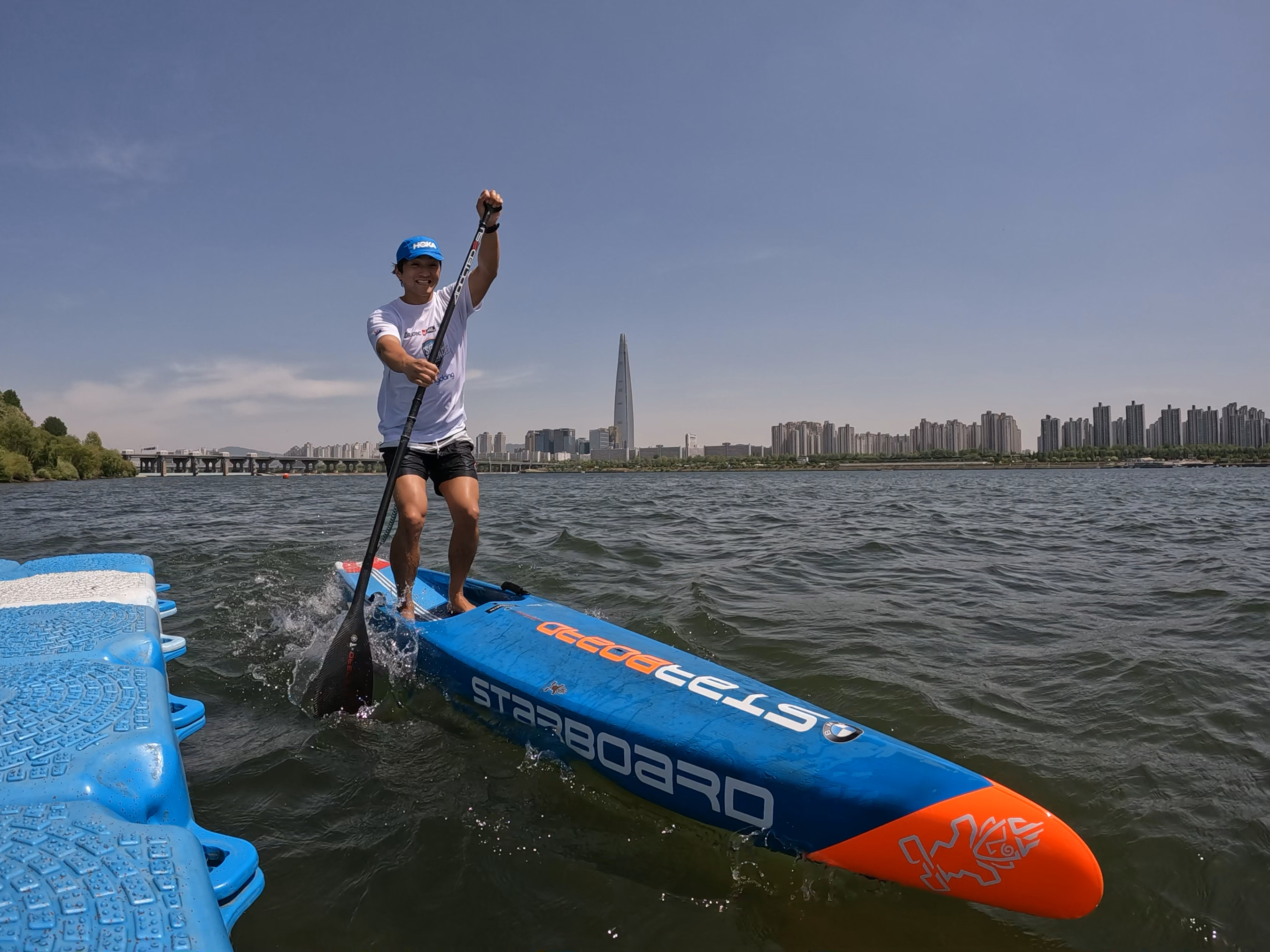 Coach Lee JinheeSUP athlete and coach · View team profile →6:55
Basics lesson 01
A warm-up that loosens your shoulders, back and legs and wakes up your sense of balance.
Learn from the video → 5:27
Basics lesson 04
Your first moves, from climbing onto the board to paddling while seated and keeping your balance.
Learn from the video → 8:10
Basics lesson 06
The basics of paddling: the board's center, where you look, and the part of the stroke where you put power into the paddle.
Learn from the video →
SUP · 4-minute read
From your height and weight to where you'll store it: 10 questions to think about before choosing your first board.
Read with illustrations ↗
SUP · 4-minute read
Start slowly from a kneeling position. Learn how to stand up on the board and how to climb back on from the side.
Read with illustrations ↗
SUP · 4-minute read
Which way should the blade face? Knowing your hand spacing and grip makes your first paddle much easier.
Read with illustrations ↗
SUP · 5-minute read
Where you look, where the blade goes in and the angle you hold the paddle. Small differences that help you go straight.
Read with illustrations ↗
SUP · 4-minute read
Not all leashes are the same. Choose the type that suits where you ride, and check how to attach and release it.
Read with illustrations ↗
SUP · 4-minute read
Double action pushes air on both the up and down strokes. Switch to single action as the pressure rises.
Read with illustrations ↗
SUP · 4-minute read
Arms out to the sides, moving up and down together. Remember the distress signal and be ready to call for help.
Read with illustrations ↗
SUP · 4-minute read
A dog life jacket, deck pad and drinking water. Six things to check before you ride together.
Read with illustrations ↗
SUP · 4-minute read
Review on one page the movement each of the five strokes creates.
Read with illustrations ↗
SUP · 4-minute read
Five scenes showing how to climb back on using the tail handle.
Read with illustrations ↗
SUP · 4-minute read
Picnic, racing and teamwork ideas for large team boards, in pictures.
Read with illustrations ↗
SUP · 4-minute read
From a water bottle to spare clothes and simple tools, a packing picture that thinks about the trip there and back.
Read with illustrations ↗